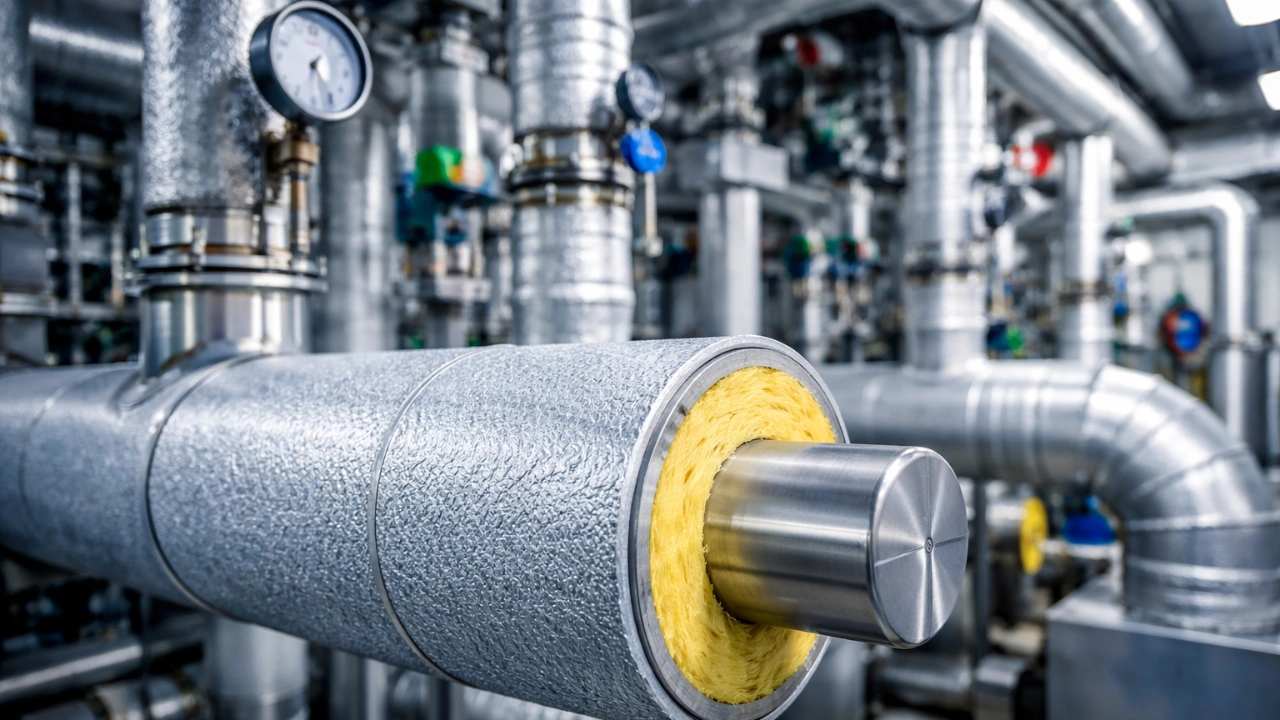
Businesses require proper planning and finances. Efficient operations and strategic measures can enable any business to survive in adverse conditions. Operational efficiency is achieved by using high-quality instruments and ensuring their timely maintenance. One of the best ways to preserve the integrity of the system is to use pipe thermal insulation. Often, most businesses overlook it due to its expensive installation charges, but the advantages outweigh the charges. It should be used in all industries to reduce the risk of machine breakdown and save money in the long run.
Know these factors before selecting the right insulation material
- Temperature: It is one of the most essential factors to consider when choosing insulation material. Different systems operate at various temperatures; hence, the insulation material also needs to be different. Systems operating at high temperatures use materials like mineral wool, while low-temperature systems use materials that resist condensation.
- Thermal conductivity: It has an inverse relationship with heat transfer. High thermal conductivity means less heat transfer, which means energy conservation.
- Resistance to moisture: Condensation is a common phenomenon in low-temperature systems. Moisture is harmful as it can lead to mould growth and damage the insulation. Hence, closed-cell materials are used in damp environments to absorb vapour.
- Durability: Insulation material with high durability keeps the structural integrity of the system. They are able to maintain their shape in changing environmental conditions.
- Thickness: One should consider the surrounding ambience, temperature, etc to decide the thickness of insulation material. For instance, thick layering is required in pipes functioning at high temperatures to prevent heat loss.
- Environment: The place where the system is situated, i.e., outdoors or indoors, influences the type of material to be used because outdoor systems require materials that can resist harsh UV rays and withstand weather changes.
How can pipe insulation benefit businesses?
- Heat Conservation: Heat escapes easily from any heating system. Pipe thermal insulation reduces heat loss up to 80%. This leads to lower energy usage and lower electricity bills. Hence, saves money in the long run.
- Saving the integrity of the structure: Moisture is harmful to any cooling system. Its accumulation causes mould and rust. This hampers the safety of the structure. Insulation also prevents the pipes from freezing in extreme temperatures.
- Ensuring high-quality products: Optimum temperature is required for the proper functioning of manufacturing processes. Temperature influences chemical reactions; hence, insulation helps to maintain it.
- Safety: Pipe insulation acts as a barrier against high temperatures and protects workers from burn injuries. High-pressure materials make noise while travelling through pipes. They absorb the vibrations and ensure a noise-pollution-free environment for the workers.
- Enhances system longevity: Layering keeps the pipes healthy and protects them from excess heat or cold. Hence, enhances the life span of the structure.
Securing a healthy future for your company
As a business owner, your focus should be on establishing an efficient manufacturing sector in your company. This ensures high-quality products and consistent performance. Contact the most reliable and leading insulation contractor, Fluid Energy System Pvt Ltd, to build a strong heating system.